GLP-1 medications like Ozempic, Wegovy, Mounjaro, and Zepbound have completely changed the conversation around weight loss and metabolic health. For many people, they’re life-changing—helping with blood sugar, weight, blood pressure, and overall energy. But there’s a side effect more and more patients are whispering about: hair loss.
If you started a GLP-1, noticed the scale dropping, and then suddenly saw more hair in your brush or shower drain, you are not alone. At Blackhawk Hair Restoration, we’re seeing a growing number of patients who are thrilled with their weight loss but anxious about thinning hair. This article explains why this can happen, what’s likely temporary, and how we can help protect and restore your hair while you stay on track with your health goals.
Here’s a quick summary before you dive in:
- GLP‑1 medications don’t usually cause permanent hair loss, but rapid weight loss and nutrient shifts can trigger temporary shedding called telogen effluvium.
- Shedding often starts 2–4 months after beginning or increasing a GLP‑1 and usually improves within 6–12 months.
- If shedding is severe, lasts more than 6–9 months, or unmasked pattern thinning, a hair restoration consult can help protect and restore your hair.
Do GLP-1 Drugs Actually Cause Hair Loss?
The first thing to know: hair loss is not listed as a major, primary side effect in the original prescribing information for most GLP-1 medications. These drugs were not designed to damage follicles or permanently thin your hair.
So why does it seem like everyone on a GLP-1 is talking about shedding?
- GLP-1 drugs are incredibly popular right now, so we’re seeing side effects at scale.
- Many patients are losing weight rapidly—often more quickly than they’ve ever experienced before.
- We now have early reports and real-world data suggesting that a subset of patients experience increased shedding after starting or increasing these medications.
Current evidence and expert opinion lean toward this explanation: the medication itself is rarely the direct “hair killer.” Instead, the way GLP-1s change your appetite, nutrition, and weight can put stress on your body. That stress can push more hairs than usual into a resting, shedding phase.
Think of it this way: the medication is the context, but the stress on your system is the trigger. For most people, that means temporary shedding—not permanent hair loss.
What Kind of Hair Loss Is It?
Most GLP-1 patients who notice shedding are experiencing something called telogen effluvium.
Your hair grows in cycles. At any given time, the majority of your hairs are in the growth phase (anagen), a smaller percentage are in a transitional phase (catagen), and a small percentage are in the resting/shedding phase (telogen). When your body goes through a big stressor, more hairs can jump into that resting phase at the same time. A few months later, they shed out together.
Common triggers for telogen effluvium include:
- Rapid weight loss
- Major surgery or illness
- High fevers
- Childbirth
- Significant emotional or physical stress
- Nutritional deficiencies
GLP-1–associated shedding fits this pattern almost perfectly. Typical features you might notice:
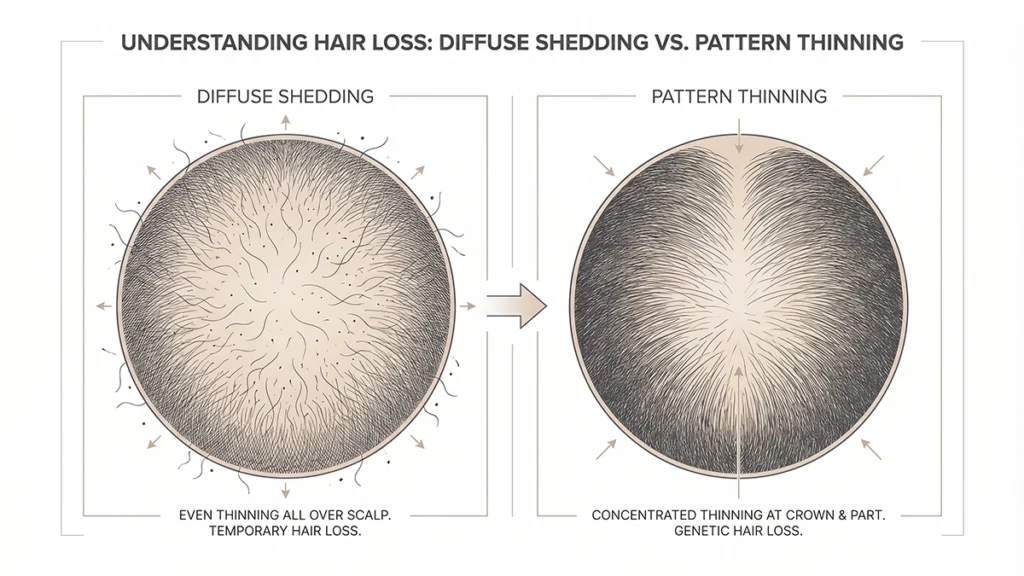
- Diffuse thinning across the entire scalp rather than circular bald patches
- A noticeable increase in hair in the shower, on your pillow, or in your brush
- Hair feels less dense or “ponytail thinner,” but your hairline may still look similar
- Shedding that starts 2–4 months after starting the medication, increasing the dose, or hitting a rapid weight-loss stretch
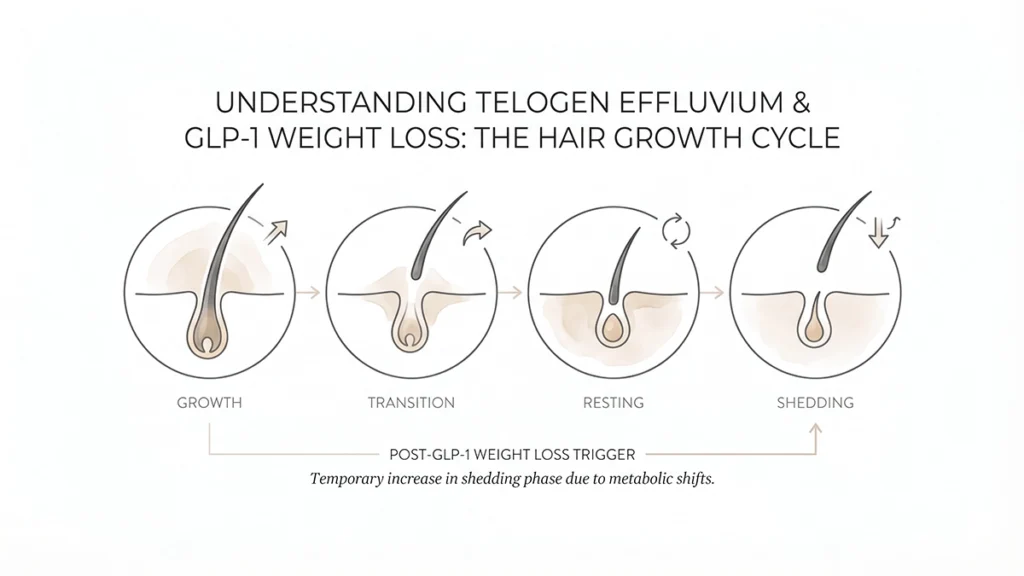
In most cases, telogen effluvium is temporary. Once the trigger is addressed and your body stabilizes, new hairs gradually re-enter the growth phase and density improves again. That said, this process moves on hair-time, not human-impatience time—so improvement is measured in months, not days.
One important nuance: if you already had underlying pattern hair loss (male or female pattern thinning), this kind of shedding can “unmask” it. In other words, you may notice thinning you never paid attention to before, or see that your hair doesn’t quite return to its previous fullness after the shedding phase ends. That’s where expert evaluation really matters.
Why Rapid Weight Loss Can Make Your Hair Shed
So what exactly about GLP-1 use increases the risk of telogen effluvium? For many patients, the answer lies in how dramatically their habits and weight change in a short period of time.
Common factors we see:
- Rapid weight loss — Dropping more than about 10% of your body weight over a few months is a big biological event. Your body reads that as stress, even if it’s positive on the scale.
- Low protein intake — Many GLP-1 patients simply don’t feel like eating. With smaller portions and skipped meals, protein often becomes the unintended casualty. Hair is made primarily of keratin, a protein. If your diet doesn’t provide enough, your body will redirect available protein to essential organs first—not your hair.
- Micronutrient gaps — When appetite decreases, it’s easy to miss important nutrients: iron, vitamin D, B12, folate, zinc, and more. Even “borderline” low levels can contribute to shedding in someone whose system is already under metabolic stress.
- Hormonal shifts — Weight loss and changes in body composition can influence hormones, including thyroid and sex hormones. For women in their 40s and 50s, GLP-1 use may overlap with perimenopause, layering another complex factor onto hair health.
The big takeaway: your body is wise but ruthless. When it senses stress or scarcity, it conserves resources for survival. Hair, unfortunately, is considered non-essential. That doesn’t mean your hair is gone for good, but it does mean we have to support your system so it feels safe to keep growing it.
How Long Does GLP-1–Related Hair Shedding Last?
The timing of telogen effluvium is fairly consistent, whether it’s caused by rapid weight loss, illness, or a major medication change. Most people notice:
- Shedding begins about 2–4 months after the “trigger” (starting the GLP-1, a big dose increase, or a rapid weight drop).
- Shedding can last several months, then very gradually starts to taper off.
- Visible improvement in density lags behind the shedding phase because new hairs need time to grow long enough to make a cosmetic difference.
Typical timeline:
- Months 0–2: You start the GLP-1 or increase your dose; weight begins to drop.
- Months 2–4: You start noticing more hair falling out than usual.
- Months 4–8: Shedding slowly improves; new growth begins but may be hard to see in the mirror.
- Months 8–12: Density looks better for many patients, especially if nutrition, labs, and scalp health were addressed along the way.
Most cases resolve within 6–12 months from the onset of shedding. However, if there’s underlying pattern hair loss, autoimmune disease, or uncorrected nutritional deficiencies, you may not fully “bounce back” without targeted treatment.
Our job is to help you understand which category you’re in and create a plan to shorten the shedding window, support regrowth, and protect your hair long term.
When Should You Be Concerned?
Some shedding with rapid weight loss is common and often reversible. But there are situations where you should absolutely get evaluated instead of simply waiting it out.
You should be concerned if:
- Shedding is severe and continues beyond 6–9 months.
- Your hair feels dramatically thinner, and you’re losing confidence in social or professional settings.
- Thinning looks patchy, or you see smooth, shiny areas or scaly, inflamed patches on the scalp.
- Your hairline is receding, or the crown is visibly thinner, especially if there’s a family history of pattern hair loss.
- You’re experiencing other symptoms: fatigue, cold intolerance, changes in your period, new acne or facial hair, or mood changes that could hint at thyroid or hormonal shifts.
- You recently had another major stressor—surgery, illness, childbirth, or iron deficiency—on top of starting a GLP-1.
In these scenarios, we want to rule out other causes, not just blame everything on the medication. At Blackhawk Hair Restoration, we take a comprehensive approach rather than treating your hair in isolation from the rest of your health.
What We Do at Blackhawk Hair Restoration
GLP-1 patients need a different kind of hair consultation. You’re working hard to improve your health and body composition; the last thing you need is generic “just take biotin” advice. Here’s how we approach GLP-1–related shedding:
Detailed History and Scalp Evaluation
We start by understanding the full picture:
- Which GLP-1 you’re on, when you started, and how your dose has changed
- How much weight you’ve lost and over what time frame
- Your current eating patterns, protein intake, and supplements
- Other medical conditions, medications, or recent stressors
- Family history of hair loss
We then perform a targeted scalp exam. In many cases we will document your density and hairline with clinical photographs, look closely at the scalp and follicles with magnification, and identify whether the pattern looks more like pure telogen effluvium, classic androgenetic (pattern) loss, or something else entirely.
This helps us answer the key question: “Is this likely temporary shedding, underlying pattern baldness, or both?”
Evidence-Based Lab Work
Because nutrition and hormones play a major role in GLP-1 hair changes, we often recommend lab testing in coordination with your primary care doctor or endocrinologist. This may include:
- Ferritin and iron studies
- Vitamin D
- Vitamin B12 and folate
- Zinc (and sometimes copper)
- Thyroid function tests
- Complete blood count and basic metabolic markers
Our goal is not to replace your medical team, but to make sure your hair is part of the broader picture. When we find low or borderline values, we can make targeted recommendations for correction rather than guessing.
Nutritional and Lifestyle Support for Hair
You do not have to choose between your weight-loss goals and your hair. We’ll give you practical, realistic guidelines for:
- Hitting a minimum daily protein target that fits within your GLP-1 appetite changes
- Structuring meals and snacks so you’re not chronically under-fueling
- Supporting hair health with the right vitamins and minerals when indicated—not a drawer full of random supplements
- Simple scalp-care routines that support healthy growth and minimize breakage
Patients often tell us that just understanding what’s going on—and having a concrete plan—dramatically reduces their anxiety around every hair they see in the shower.
Medical Hair Therapies
While telogen effluvium often resolves over time, the right treatments can help stabilize shedding and jump-start regrowth. Depending on your unique situation and any underlying pattern hair loss, we may recommend:
- Topical or oral minoxidil to encourage growth and shorten the shedding phase
- PRP (platelet-rich plasma) or regenerative scalp treatments to improve follicle environment and density
- Low-level laser therapy devices to support hair cycling at home
- Customized topical formulations (for example, combinations that address both miniaturization and scalp inflammation)
If your evaluation suggests that GLP-1 use has unmasked pre-existing pattern hair loss, early medical therapy is especially important to preserve as much of your native hair as possible.
Surgical Hair Restoration (When Appropriate)
Most GLP-1–related shedding does not require surgery. However, if your weight-loss journey reveals underlying permanent thinning that significantly affects your confidence, hair transplantation may be an option after the active shedding phase is under control.
In those cases, we carefully assess donor hair stability, use advanced techniques to ensure natural hairline design and density, and plan surgery around your ongoing GLP-1 use and health goals. The focus is always on natural, undetectable results that blend seamlessly with your existing hair.
You can see real results in our hair restoration before & after photos.
Should You Stop Your GLP-1 If You’re Losing Hair?
This is one of the biggest questions we hear.
For many patients, the benefits of GLP-1 therapy—improved blood sugar, lower cardiovascular risk, sustainable weight loss—are significant. Suddenly stopping the medication because of shedding is usually not the best first move and should never be done without talking to the provider who prescribed it.
Our philosophy is collaborative:
- Help you understand whether your hair loss is likely temporary and reversible
- Support your hair and scalp through the shedding phase with nutrition and targeted treatments
- Work with your prescribing physician if any dose or medication changes need to be considered for your overall health
In other words, our goal is not to take away a medication that has helped your health, but to protect one of the most visible parts of your identity—your hair—while you continue your progress.
What You Can Do Right Now
If you’re on a GLP-1 and noticing more shedding than usual, here are practical steps to take today:
- Start tracking your shedding and photos weekly instead of obsessing day-to-day.
- Make sure you are consistently hitting a reasonable daily protein target.
- Avoid crash dieting; let the GLP-1 do its work without extreme calorie restriction.
- Be gentle with styling—limit tight ponytails, harsh chemicals, and excessive heat.
- Reach out for a professional evaluation if you’re worried, rather than trying to diagnose yourself through social media.
Your hair is often one of the first things you see in the mirror. You deserve clarity, a plan, and a team that takes your concerns seriously.
Schedule a GLP-1 Hair Check at Blackhawk Hair Restoration
If you’re in the Bay Area and you’ve noticed increased hair shedding since starting a GLP-1 medication, we’re here to help. At Blackhawk Hair Restoration, our team is experienced in teasing apart normal, temporary shedding from true progressive hair loss—and in designing a treatment plan that respects both your health goals and your appearance.
We’ll:
- Review your GLP-1 history, weight-loss timeline, and overall health
- Examine your scalp and hair pattern with an expert eye
- Coordinate any necessary labs with your existing medical team
- Build a personalized plan to stabilize shedding, support regrowth, and protect your hair long term
You don’t have to choose between feeling better in your body and feeling confident in your hair. If you’re ready for answers, we invite you to schedule a consultation and let us walk this part of your journey with you.
We offer in-practice and virtual consultations.
GLP-1 and Hair Loss: Frequently Asked Questions
Is Ozempic hair loss permanent?
In most patients, hair loss associated with GLP-1 medications like Ozempic is not permanent. It is usually a temporary shedding called telogen effluvium, often triggered by rapid weight loss, reduced protein intake, or nutrient deficiencies. Once weight and nutrition stabilize—and underlying issues are treated—many patients see their hair gradually improve over several months.
How long does GLP-1-related hair shedding last?
Shedding typically begins 2–4 months after starting or increasing a GLP-1 and can last several months. Most cases of telogen effluvium improve within 6–12 months, but visible density changes take time because new hairs need to grow long enough to be noticeable.
How do I know if my hair loss is from GLP-1 use or from genetics?
GLP-1-related shedding tends to be diffuse (all over the scalp) and starts a few months after a trigger like rapid weight loss. Genetic or pattern hair loss usually shows a receding hairline, thinning at the crown, or widening part over time. A professional evaluation can determine whether you’re dealing with temporary shedding, underlying pattern thinning, or both.
Should I stop my GLP-1 medication if I notice hair loss?
You should never stop a GLP-1 medication without talking to the provider who prescribed it. For many patients, the health benefits are significant. In most cases, we focus on supporting your hair with nutrition, lab-guided treatment, and targeted therapies while you continue appropriate GLP-1 care under your physician’s supervision.
What can I do at home to reduce hair loss while on GLP-1s?
Focus on getting enough protein, avoiding crash dieting, and being gentle with your hair (less tight styling, heat, and harsh chemicals). Track your shedding weekly instead of daily and consider professional guidance if shedding is severe, lasts longer than 6–9 months, or is affecting your confidence.
When should I see a hair restoration specialist about GLP-1 hair loss?
You should book a consult if shedding is heavy or prolonged, if you notice patchy areas or a receding hairline, if there is a strong family history of hair loss, or if you have other symptoms such as fatigue or hormonal changes. A specialist can identify the true cause and create a plan to stabilize shedding and support regrowth.